 Every October, we see pink ribbons everywhere as people come together for Breast Cancer Awareness Month. But today, on Metastatic Breast Cancer Awareness Day, I want to shine a light on the women living with stage IV breast cancer and why our conversations need to go beyond awareness.
For women living with metastatic breast cancer (mBC), it’s about more than a diagnosis. It’s about navigating treatment, finding support, understanding options, and continuing to live life on their own terms.
Through the National Minority Quality Forum’s (NMQF) Support Our Sisters (SOS) program, I’ve had the privilege of connecting with some incredible women who remind me every day why this work matters.
And these past couple of weeks have been a powerful reminder of just how much we can accomplish when we listen, connect, and work together.
Showing Up, Listening, and Building Connections
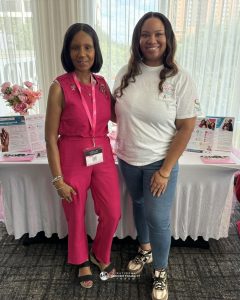
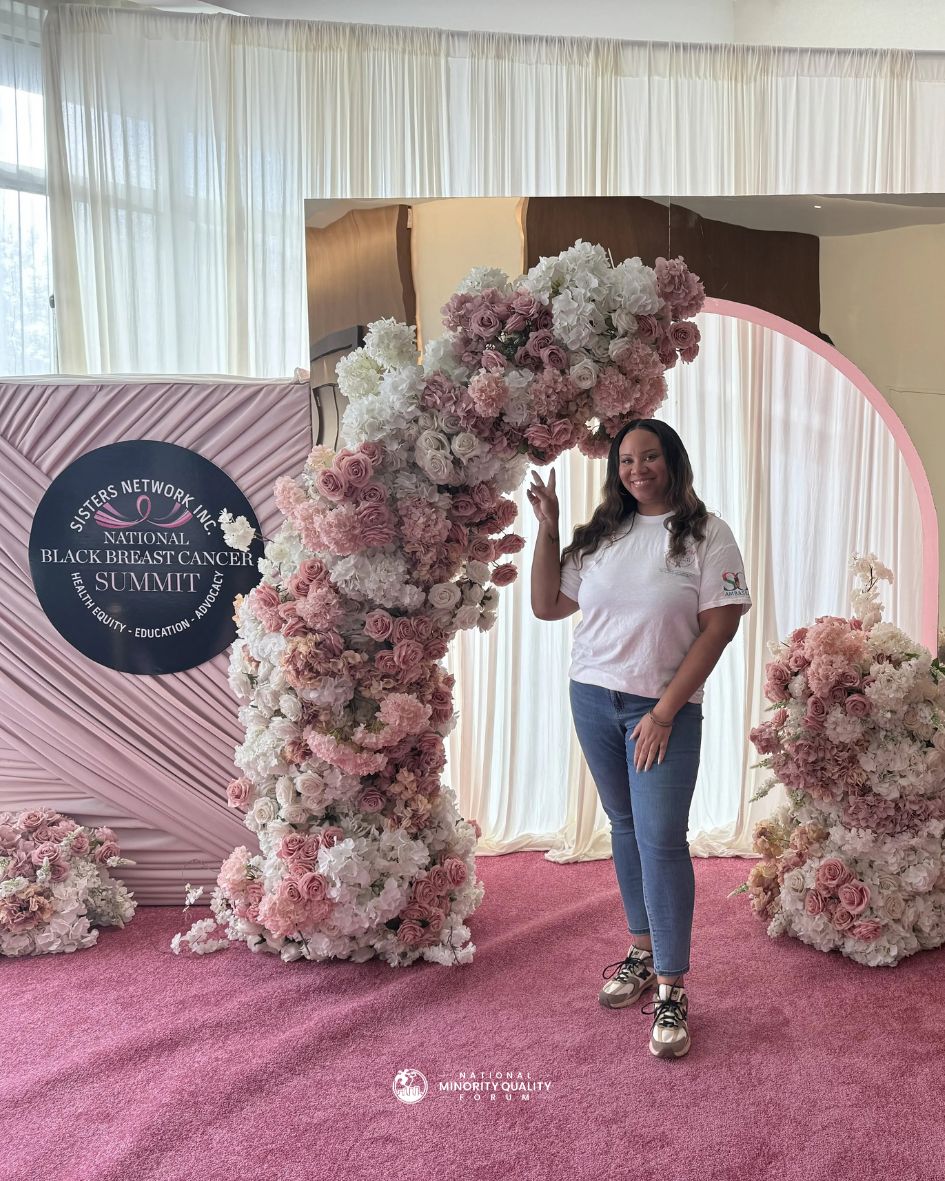
Earlier this month, I traveled to Houston to represent NMQF at the Sisters Network Inc. National Black Breast Cancer Summit. It was an amazing opportunity to connect with survivors, thrivers, advocates, and organizations doing important work in the breast cancer community.
What I appreciated most were the conversations. I heard women talk about their experiences navigating care, the importance of having someone who understands what they’re going through, and the need for more accessible information and resources.
Just a couple of days later, I had the opportunity to speak at METAvivor’s Stampede event, where I shared the work we’re doing through Support Our Sisters to better support Black and Hispanic women living with mBC.
One message I emphasized during my presentation was that we can’t create meaningful solutions for patients without first listening to them.
That’s exactly how Support Our Sisters was built. We started by asking women about their experiences, the challenges they face, and what they need most. Their feedback has helped us develop educational resources, create opportunities for peer support, and focus on issues like clinical trial awareness and shared decision-making.
Both events reminded me that while there’s still a lot of work to do, there are so many passionate people and organizations committed to making a difference. And when we work together, our impact can be even greater.
A New Look for Support Our Sisters!
Another exciting milestone is the launch of our newly redesigned Support Our Sisters website! We’ve worked to create a space where women living with mBC can easily find information about their diagnosis, treatment options, clinical trials, and resources to help them navigate everyday life.
One feature I’m especially excited about is our interactive clinical trial heat map. I know that for many women, the idea of participating in a clinical trial can feel overwhelming, especially when they don’t know where to start. Our heat map helps women explore clinical trial opportunities across the country and serves as a starting point for conversations with their healthcare teams.
Increasing clinical trial awareness among Black and Hispanic women is especially important because these communities have historically been underrepresented in cancer research. The website also includes downloadable resources covering everything from emotional well-being to financial planning and managing treatment.
My hope is that women will visit the site and walk away feeling a little more informed, a little more confident, and a lot more supported.
Take a look at our new website: SupportOurSistersWithMBC.org.
What’s Next for Support Our Sisters?
We’re keeping the momentum going!
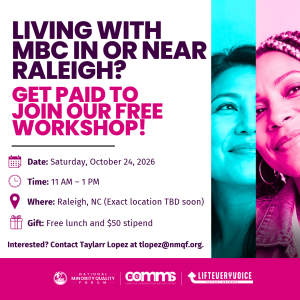
On October 24, we’re heading to Raleigh, NC, for an intimate, two-hour metastatic breast cancer education workshop for Black and Hispanic women living with mBC.
We’ll bring women together over lunch to connect, learn from a breast cancer oncologist, and hear from a patient advocate who understands what it’s like to navigate this disease firsthand. We’ll talk about breast cancer subtypes, treatment options, clinical trials, and ways women can feel more confident speaking up and participating in decisions about their care. I’m especially looking forward to creating a space where women feel comfortable asking questions, sharing their experiences, and connecting with other women who understand their journey.
And in December, we’ll be heading to the San Antonio Breast Cancer Symposium, where our Support Our Sisters abstract has been accepted for a poster presentation!
This is a milestone I’m particularly proud of because it gives us an opportunity to bring what we’ve learned directly from Black and Hispanic women living with mBC into a space filled with researchers, healthcare professionals, and leaders in breast cancer care.
For me, that’s what this work is all about: taking what women share with us and using those insights to help drive meaningful change.
More Than Awareness
As I reflect on Metastatic Breast Cancer Awareness Day, I keep coming back to one thing: Every woman has a story, and every story deserves to be heard.
I’ve met women who have been living with metastatic breast cancer for years, women who are still trying to make sense of a recent diagnosis, and women who have turned their experiences into powerful advocacy for others.
Their strength, honesty, and willingness to share their journeys continue to inspire the work we’re doing through Support Our Sisters. But I also recognize that women shouldn’t have to be strong all the time. They deserve access to information they can understand, healthcare teams who listen, and communities where they can show up exactly as they are.
That’s the kind of community we’re working to build.
Join Our Sisterhood. Share Your Story.
If you’re a Black or Hispanic woman living with metastatic breast cancer, I’d love for you to become part of our Support Our Sisters Patient Network.
We’re building a community where women can connect, learn from one another, access helpful resources, and have opportunities to make their voices heard. We’re also looking for women who are willing to share their stories. Whether you’ve been living with mBC for a few months or many years, your experience matters.
You never know who might need to hear your story or how your words might help another woman feel less alone.
Join our patient network. Share your story. Help us make sure every sister has a voice. Because awareness is important, but what we do with that awareness matters even more.
And together, we can turn awareness into action, one sister and one story at a time.